In the northern shore region of Lake Biwa (Biwa-ko 琵琶湖), in the old Ika County (Ika-gun 伊香郡) of the old О̄mi Province (О̄mi-no-Kuni 近江国), now Nagahama City (Nagahama-shi 長浜市) in current-day Shiga Prefecture, there can be found a style of minka distinctive in both its external appearance and its mode of habitation (jūkyo keishiki 住居形式). In the year Taishо̄ 14 (Taishо̄ jū-yon-nen 大正十四年, 1925), in compiling the Journal of Ika County (Ika-gun-shi 伊香郡誌), the geographer Fujita Motoharu (藤田元春, 1879 - 1958) undertook a survey of the minka of this belt north of Lake Biwa, terming the style Ika-gata minka (伊香型民家, ‘Ika form minka’), and though the same publication carried a history of Japanese minka alongside Fujita’s survey, it is his term that has since entered general use. What makes these minka distinctive is that a section of the habitable part of the dwelling is not given a raised timber floor (yuka 床); rather, rice husks (momi-gara 籾殻) or similar materials are laid down on the beaten earth. This section is called the niuji (にうじ), and this mode of habitation, called doza-sumai (土座住まい lit. ‘earth sit dwelling’), survived in the area well into the 20th century.
Ika-tsukuri minka are generally gable-entry (tsuma-iri 妻入り, called here koma-iri 小間入り), with a hiroma-type (hiroma-keishiki 広間形式) internal layout. Ika County is divided into two by the ridgeline of Mount Shizu-ga-take (賎ヶ岳) that runs through it north-south, and the minka of its east and west parts differ slightly in form. Those in the west are called О̄ura-type (О̄ura-gata 大浦型) and those in the east are called Yogo-type (Yogo-kata 余呉型), after their respective districts. Here we will be mainly concerned with the Yogo-kata variant, which, along with the minka of the Echizen (越前) and Kaga (加賀) regions, belong more broadly to the Hokuriku type (Hokuriku-gata 北陸型). In the Yogo type, there are also examples of side-entry form (hira-iri keishiki 平入り形式), but most are gable-entry, with the front-doma three-room layout (mae-doma san-madori 前土間三間取り) being the base layout. With development, the rear raised-floor section (zashiki-bu 座敷部) became a regular four-room layout (seikei yon-madori 整形四間取り), called kuni-naka sumai (国中住まい, lit. ‘country middle dwelling’).
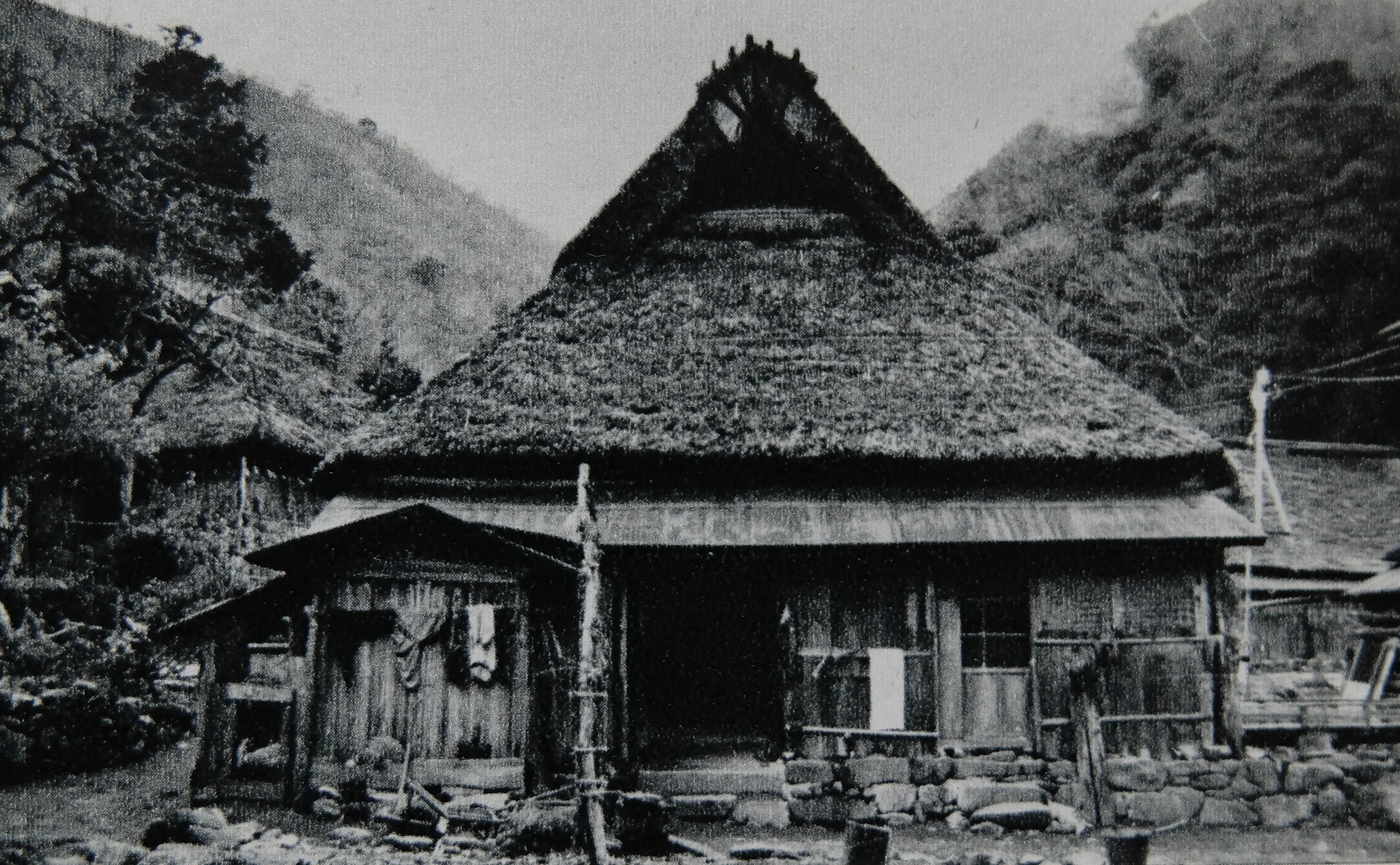
The Ika-tsukuri is an old style that dates back to the early Edo period (Edo jidai 江戸時代, 1603 - 1868); it is a simple gable-entry (tsuma-iri 妻入り), Dutch gable (iri-moya-zukuri 入母屋造り) style, with ornaments called mae-dare (前だれ) decorating the gable opening (hafu-guchi 破風口). The awning (hisashi 庇) and other façade elements of this minka have been somewhat remodelled. Yogo village (Yogo-mura 余呉村), Ika County (Ika-gun 伊香郡), Shiga Prefecture.
In houses of this style, there is a central post (chūshin-bashira 中心柱), called the naka-bashira (中柱), at the centre of the boundary between the ‘earth-sitting’ (doza 土座) niuji and the raised-floor zashiki parts of the interior; across from this, there is a komo-kake-bashira (菰掛柱, lit. ‘mat hanger post’) in the centre of the façade wall, so the entry (iri-guchi 入口) is offset to the left or right. On entry, the earth-floored ‘kitchen’ (daidokoro だいどころ) and niwa (にわ) space spreads out before one across the entire width of the dwelling. In this region, the earth floor of the utility area (doma 土間) is kept extremely clean; all footwear is removed at the ‘kitchen door’ (kado-guchi かど口, lit. ‘stove mouth’), and indoor slippers or sandals called uwa-zо̄ri (上草履) are put on; alternatively, the doma is spread with mats (mushiro 莚), further blurring the conventional distinction between doma and zashiki that holds in more ‘typical’ minka. There are also lashed bamboo mat (takesu 竹簀) ‘gangways’ or ‘walking boards’ (ayumi-ita 歩み板) called mizara (みざら), that allow visitors remove their footwear outside and go through to the zashiki without need of slippers. The daidokoro is continuous with and open to the doma (or niwa); with a firepit (irori 炉) cut (dug) into the floor, it is the centre of the life and activity of the house.
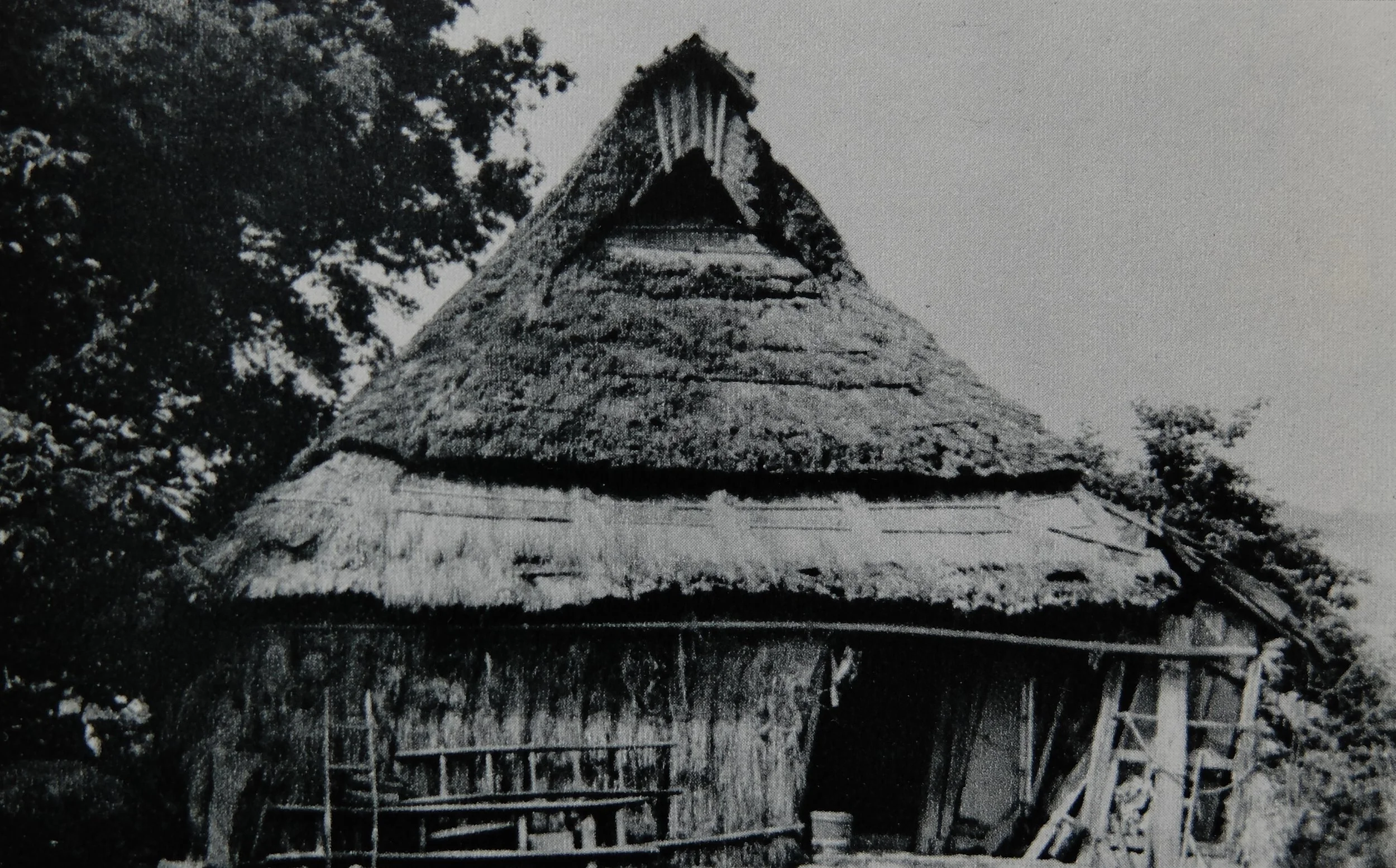
In this example, the front awning (mae-bisashi 前庇) is thatched, and the dwelling has an extremely closed external appearance. The age of this house is made evident by the considerable lean of the post visible on the right; its style is representative of old houses in the district. Nishi-Asai village (Nishi-Asai-mura 西浅井村), Ika County (Ika-gun 伊香郡), Shiga Prefecture.
The ground surface (jimen 地面) of the niuji is slightly dug out to receive the rice husk (momi-gara 籾殻) subfloor, which is topped with mats mushiro (莚) to complete the doza-sumai space; beyond this, to the left and right of the naka-bashira, the two rooms (heya 部屋) proper, the formal room (zashiki 座敷) and the bedroom (nema 寝間), are a step higher than the niuji and board-floored (yuka-bari 床貼り).
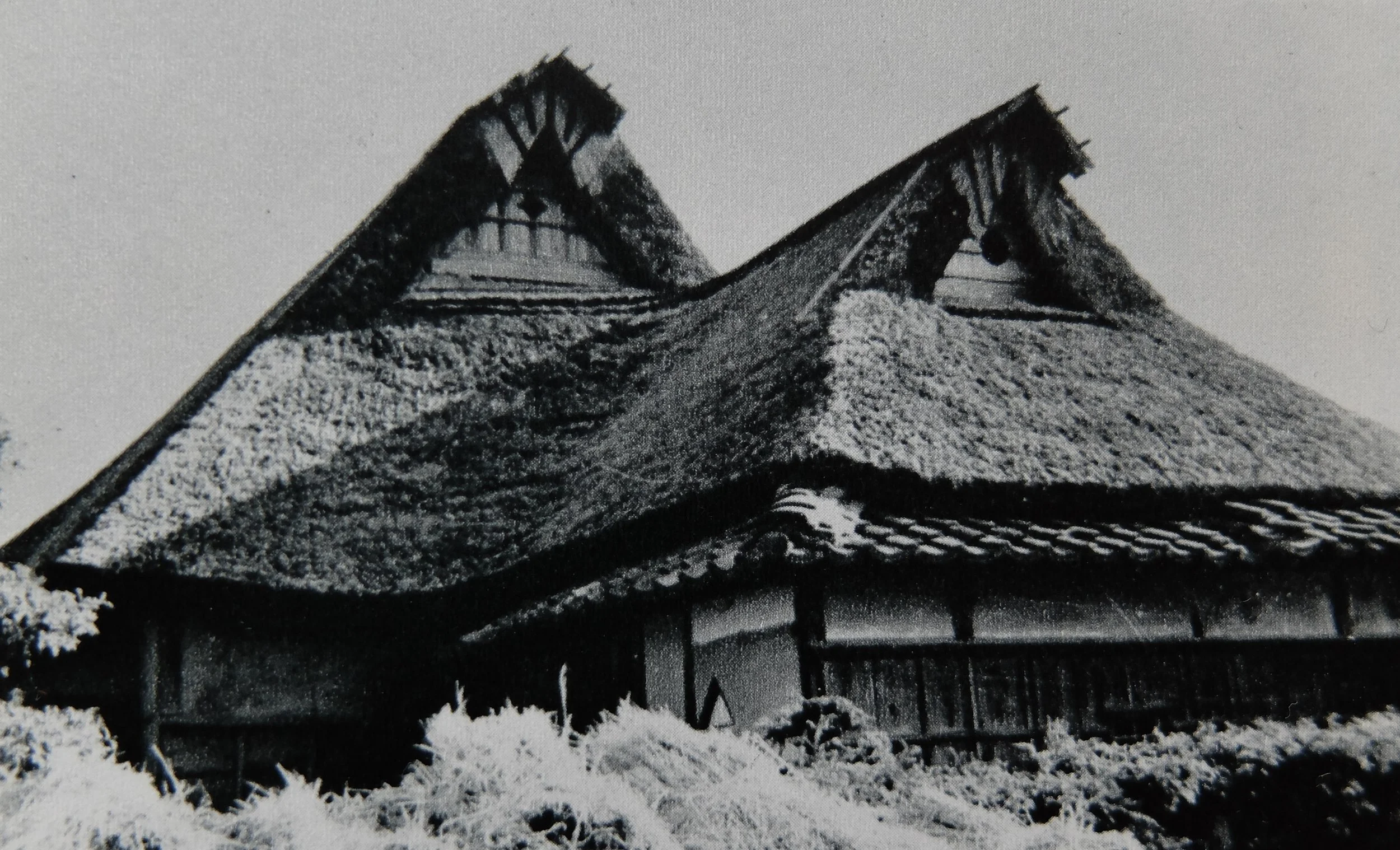
In this Ika-style (Ika-gata 伊香型) minka among the paddy fields (suiden 水田) of the plain (heiya 平野), the raised-floor zashiki (座敷) projects from the rear (haigo 背後); this style is called ittou-tsukuri (一棟造り, ‘one ridge style’). When the zashiki projects from the side (soku-men 側面), the style is called tsunoya-zukuri (つのや造り, ‘corner house style’). Kinomoto-chо̄ (木之本町), Ika County (Ika-gun 伊香郡), Shiga Prefecture.
As these minka are gable-entry form (tsuma-iri keishiki 妻入り形式), the gable opening (hafu-guchi 破風口) of the Dutch gable or ‘gable-over-hip’ (iri-moya-zukuri 入母屋造り) thatched roof is prominent in the façade, so it is given distinctive ridge-end ornaments (tо̄tan-kazari or mune-zuma-kazari 棟端飾り): radiating timbers called mae-dare (前垂れ, lit. ‘front hanging’) that give the dwellings a distinct local character. The gables (hafu 破風) may also be ornamented with hanging pendants (gegyo 懸魚), latticework (kitsure-kо̄shi きつれ格子), and the like.
This region has a cold climate, and in its mountainous areas, minka walls are fully plastered (о̄-kabe 大壁) ‘earth wall construction’ (do-kabe-zukuri 土壁造り), while the walls of minka on the plains are half-timbered (shin-kabe 真壁), with white-plastered (shikkui-nuri 漆喰塗り) infill, and the timber parts (moku-bu 木部) stained with benigara (紅殻), a red iron oxide pigment.