In the southern part of the old province of Kai (甲斐), or Kai-no-kuni (甲斐国), present-day Yamagata Prefecture, in the watershed of the Fuji River (Fuji-kawa 富士川) and the vicinity of Fuji Five Lakes (Fuji-go-ko 富士五湖), the model minka prototypes were the ‘clipped gable’ style (kiri-hafu tsukuri 切り破風造り) discussed in a previous post, and the hipped style (yose-mune-zukuri 寄棟造り) known as tsubushi-yane (つぶし屋根). With the flourishing of sericulture from the Kyо̄hо̄ (亨保) era (1716 - 1736) onward, a minka style called kabuto-zukuri (甲造り, lit. ‘helmet style’) appeared in this district. There are two types of kabuto-zukuri: one is the result of modifying the gable-end roof faces (tsuma-yane 妻屋根) of a hipped roof; the other is the ‘completed’ or ‘perfected’ form, called Fuji-kei ni-juu kabuto (富士系二重甲 ‘Fuji lineage two-tier helmet’), in which two tiers of eaves or awnings (hisashi 庇), called odare (尾垂れ), are added to the roof.
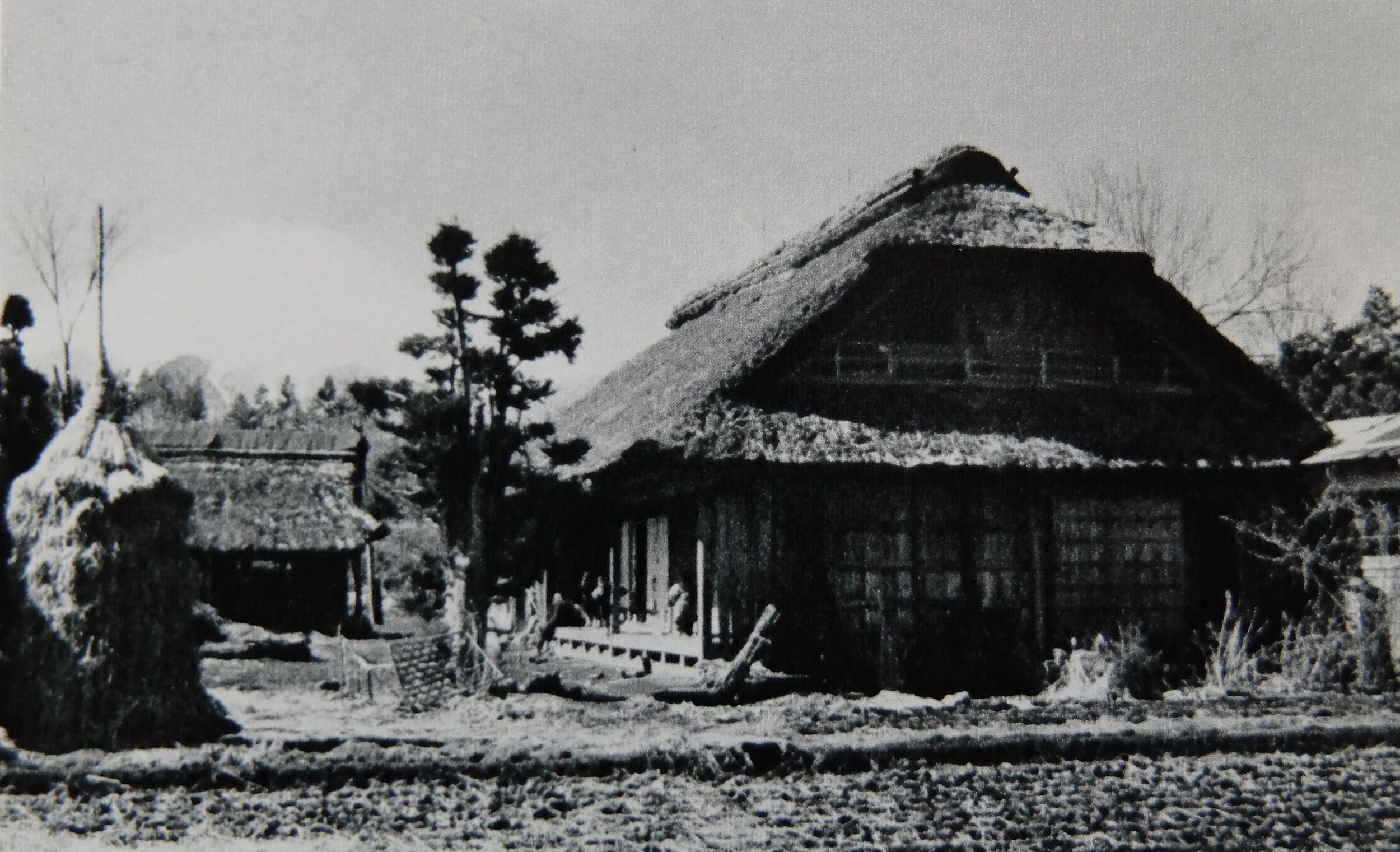
Oshino village (Oshino-mura 忍野村), on the north side of Lake Yamanaka (Yamanaka-ko 山中湖), has kabuto-zukuri minka and Mt Fuji as its ‘motifs’, and has become a famous site for taking photographs. The minka shown here is a simple and plain kabuto-zukuri in the hipped roof (yose-mune 寄棟) lineage. Yamagata Prefecture.
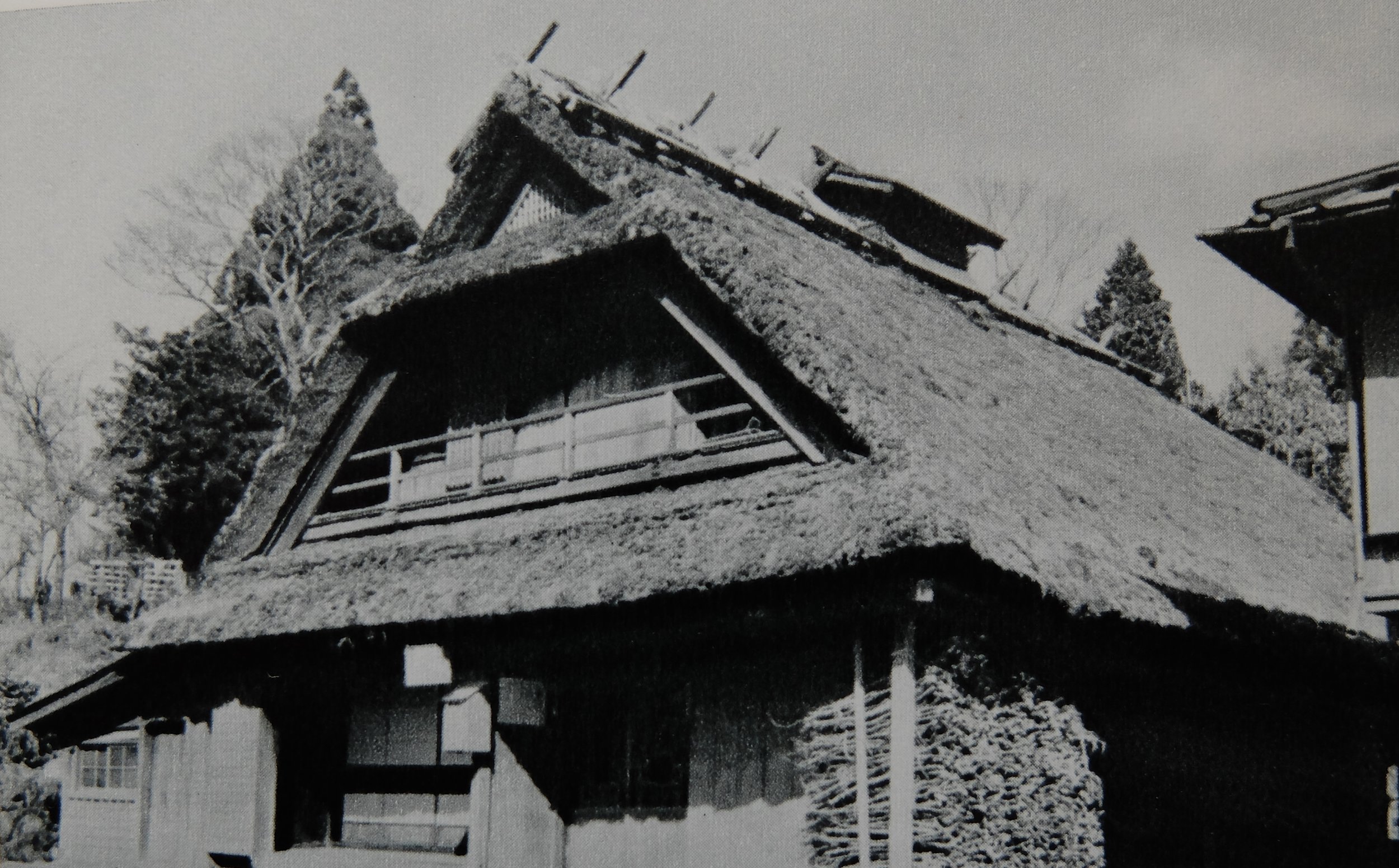
Beautiful kabuto-zukuri minka can (or could) be seen in the villages around the shores of the Fuji Five Lakes (Fuji-go-ko 富士五湖). This one is a Fuji-kei ni-juu kabuto (富士系二重甲 ‘Fuji lineage two-tier helmet’), gable-entry (tsuma-iri 妻入) farmhouse, fronting onto the highway (kaidо̄ 街道) on Lake Motosu (Motosu-ko 本栖湖). Yamagata Prefecture.
These styles spread eastward into a belt encompassing the Nishi-Tama (西多摩) district of Tokyo Prefecture and the Tama Hills district (Tama-kyūryо̄chi 多摩丘陸地) of Kanagawa Prefecture, and were also introduced into Fukushima Prefecture, where sericulture was late to flourish; in the Date region (Date chihо̄ 伊達地方) of Fukushima, the style was known as azuma-ya (あずまや). The previously-covered taka-happou style (taka-happou-tsukuri 高はっぽう) also ultimately belongs to the kabuto-zukuri group: both are hipped-roof constructions with alterations made to the gable-ends (tsuma 妻). Just as the same minka style can take a different name from region to region, so too there are variations in roof design, from heavy and dignified to light and nimble, from concave (sori 反り or teri 照り) to convex (mukuri 起り); in this way the minka of each region develops their own ‘flavour’.
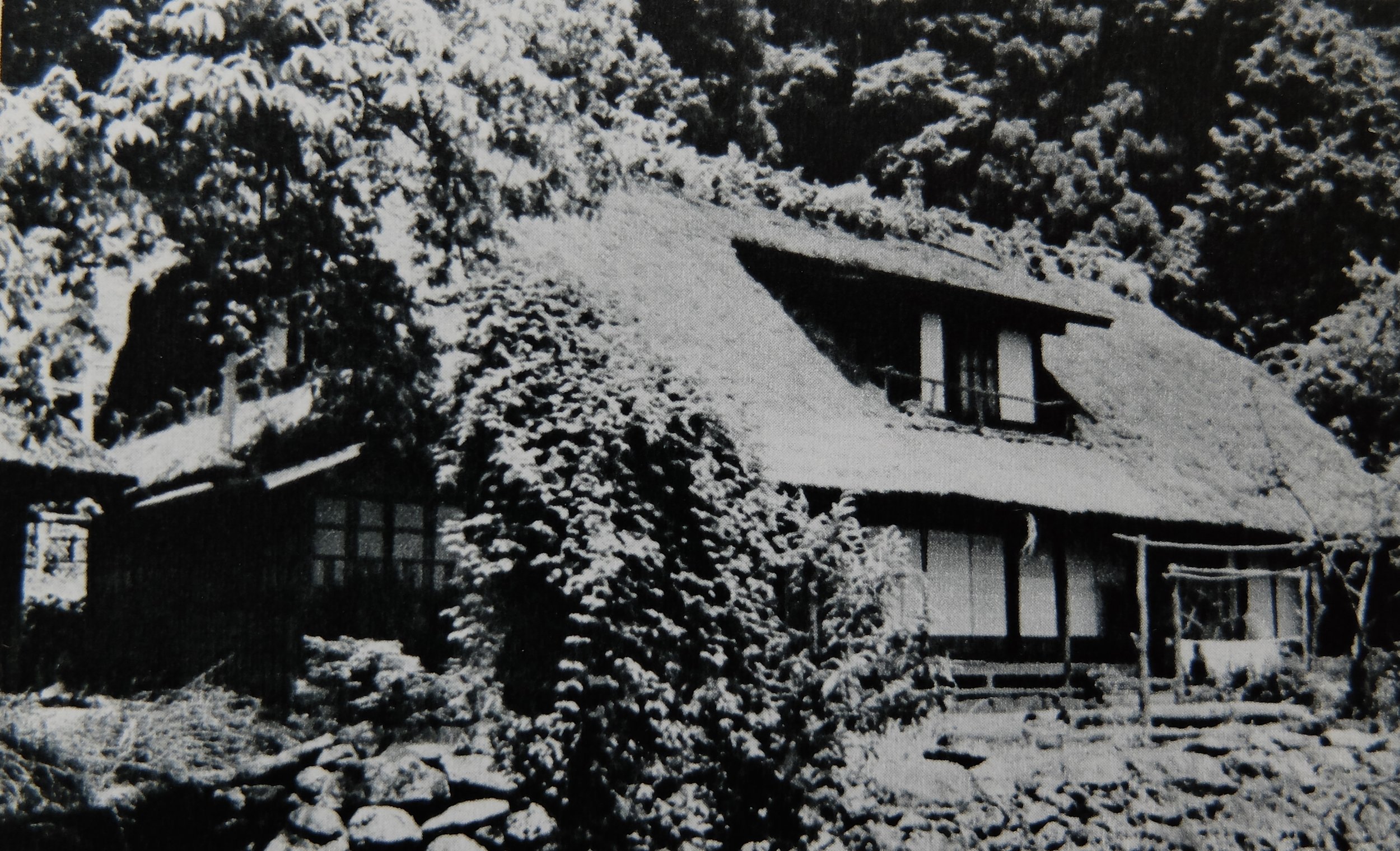
A ‘hipped kabuto’ style (yose-mune kabuto-zukuri 寄棟甲造り) minka with a ‘push-up roof window’ (tsuki-age yane-mado 突上げ屋根窓) at the centre of the roof. The main post (daikoku-bashira 大黒柱) is a timber called mine-bari (ミネバリ) or ono-ore-kanba (オノオレカンバ, Betula schmidtii Regel, a type of birch), 25 cm x 36 cm in section. The building was built in around 1840. Yamagata Prefecture.
Raising young silkworms (chisan 稚蚕) necessitates a room that can be closed up (for warmth) but is also large enough to accommodate the required number of silkworm racks (sanka 蚕架); a room of about ten jо̄ (帖), or about 18m2, is suitable. As a result of these requirements, the interior layout was typically transformed from a hiroma-type (hiroma-gata 広間型) layout to a regular layout (seikei-madori 整形間取り). In due course, the pursuit of floor area for ‘silkworm rooms’ (sanshitsu 蚕室) was expressed in the tendency towards increasing the number of levels in the roof space (koya-ura 小屋裏).
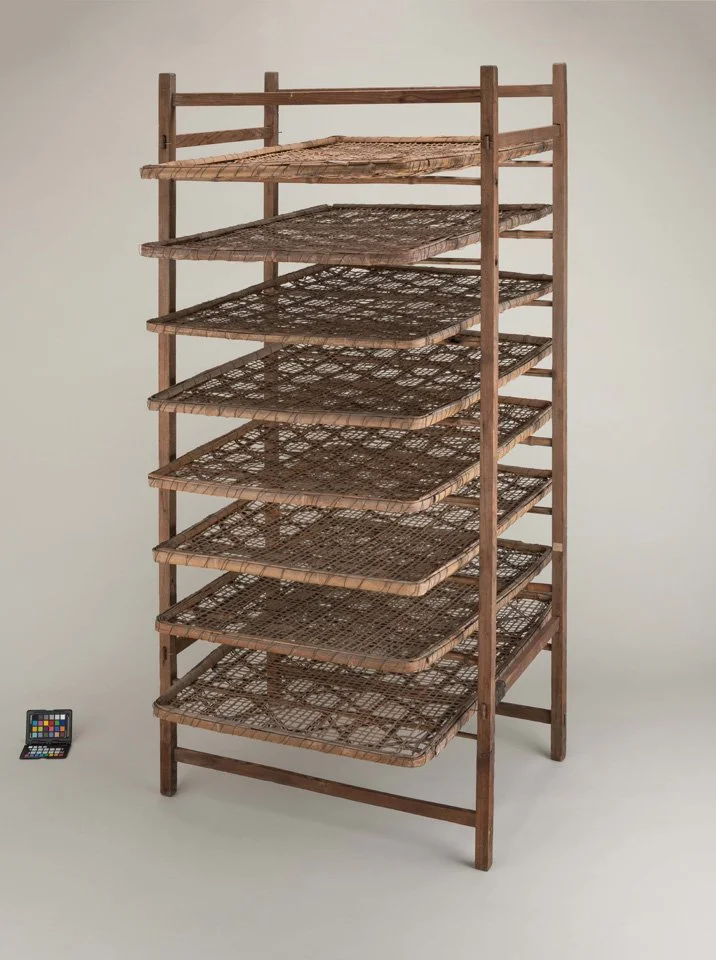
A silkworm rack (sanka 蚕架).