In the Kо̄fu basin (Kо̄fu bonchi 甲府盆地) and the surrounding foothills (sanroku 山麓), in Yamanashi Prefecture, a thatched (kusa-buki 草葺き), gable-roofed style (kiri-tsuma-zukuri 切妻造り) called kiri-hafu tsukuri (切り破風造り, lit. ‘cut gable style’) is prominent. Riding the Chūо̄ line (Chūо̄-sen 中央線) from Tokyo, on emerging from the Sasago Tunnel (Sasago Tonneru 笹子トンネル) and looking out over the basin from the mountainsides (sanpuku 山腹) around Katsunuma (勝沼) and Enzan (塩山), minka of this style can be seen in the distance, dotted here and there among the grape orchards (budо̄-batake ぶどう畑) that blanket the basin.
The most characteristic element of this style are the long ridge-supporting (muna-mochi-bashira 棟持柱) through-posts (tо̄shi-bashira 通し柱), called udatsu-bashira (うだつ柱), that are arrayed along the ridge-line and run from the ground, through the upper floors, to the ridge. The upper floors are known locally as wanike (わにけ), from uwa-ni-kai (上二階, ‘above second floor’), but wanike can refer to any upper storey, whether the first floor above the ground floor, known as the ‘second floor’ (ni-kai 二階) or any floor above that (the ‘third floor’ san-gai 三階 and so on). Udatsu-bashira that are visible in the gable-end walls are called happо̄-udatsu (破風卯建, ‘gable udatsu’).
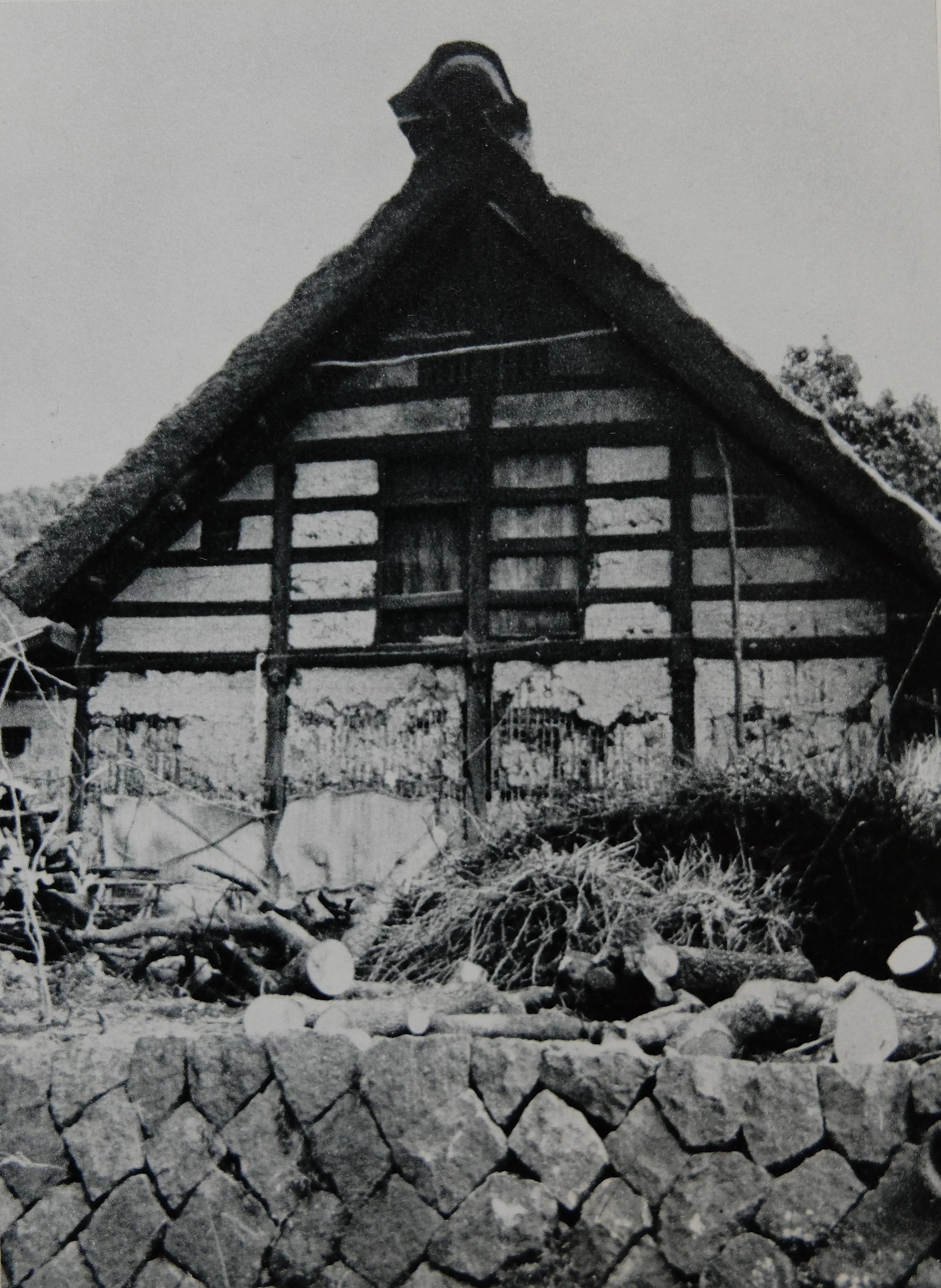
Characteristic of the kiri-hafu tsukuri (切り破風造り) style are the ridge-pole (muna-gi 棟木) supporting through-posts (tо̄shi-bashira 通し柱), called udatsu-bashira (うだつ柱), that run from the ground to the apex of the roof. Those in the gables, such as the central of the posts visible here, are called happо̄-udatsu (破風卯建). Yamagata Prefecture.
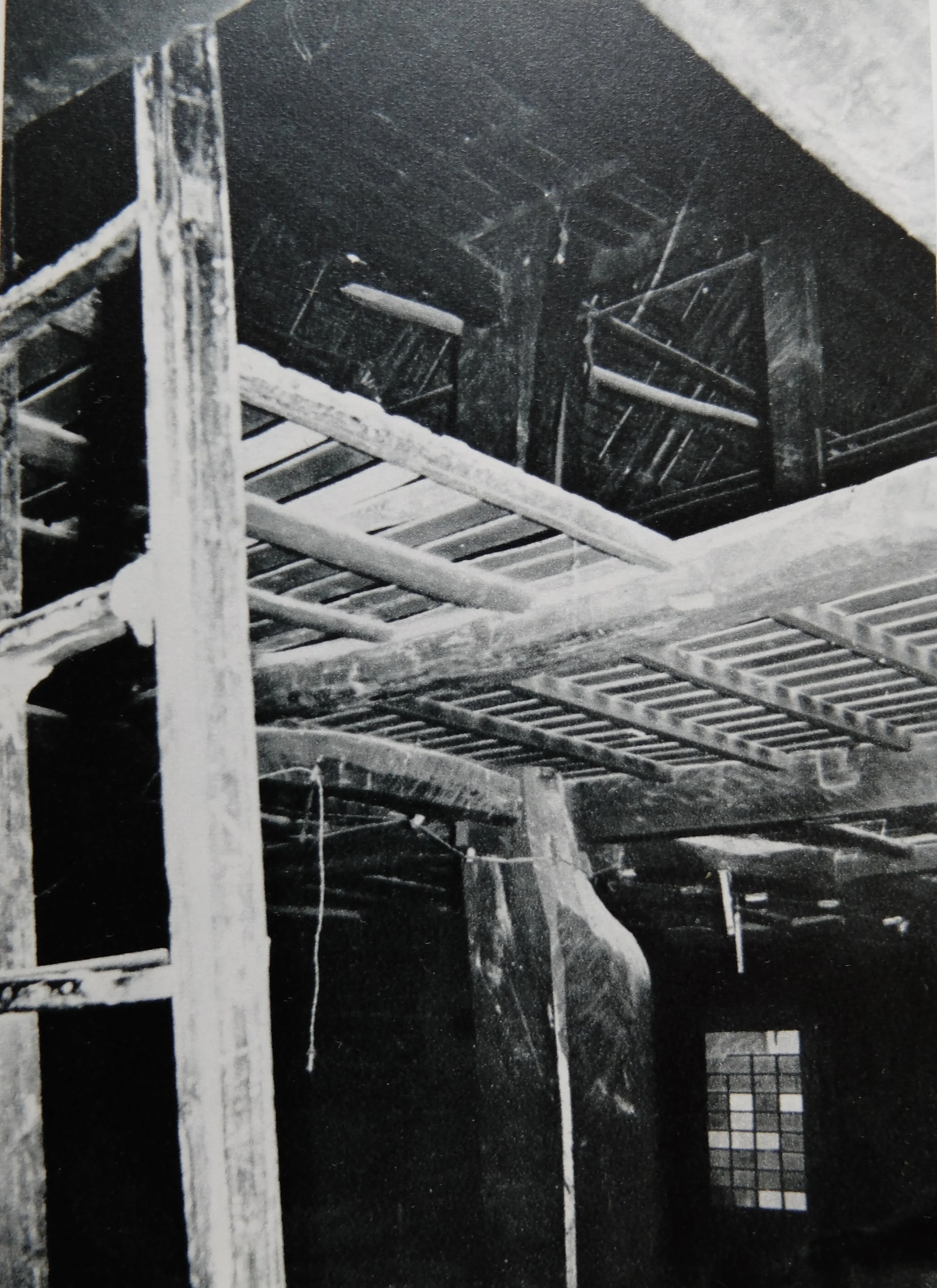
The kiri-hafu tsukuri roof space consists of multiple levels, called wanike (わにけ); the through-posts (udatsu-bashira) and the massive main post (daikoku-bashira 大黒柱) rise up through these floors to the ridge. Yamagata Prefecture.
In order to use the space under the steeply-pitched roofs for sericulture, the floors for two or three upper wanike levels were first constructed, and windows for natural light (saikо̄-mado 採光窓) were installed in the gable walls. These alone were not sufficient for the purpose of sericulture, however, so to make this style of minka suitable for that objective, there were two methods of improvement. One was to open up windows in the centre of the long sides (hira-gawa 平側) of the roof, with a gently pitched, board-clad (ita-buki 板葺き) or tiled (kawara-buki 瓦葺き) awning roof (hisashi-yane 庇屋根) above them, a form called tsuki-age yane (突上げ屋根, ‘push up roof’). The other was to push up the central part of the roof apex and install large windows, an arrangement that also served as a ‘ventilation tower’ (ki-nuki yagura 気抜き櫓); this style is called tsuki-age mune (突上げ棟 ‘push up ridge’). In further pursuit of optimisation for sericulture, roofs developed into the ‘two step chimney style’ (ni-dan kemuri-dashi-tsukuri 二段煙出し造り), which combines the tsuki-age yane and the tsuki-age mune, and the ‘tower style’ (yagura-tsukuri 櫓造り), an advancement on of the tsuki-age mune, resulting in extremely distinctive minka forms.
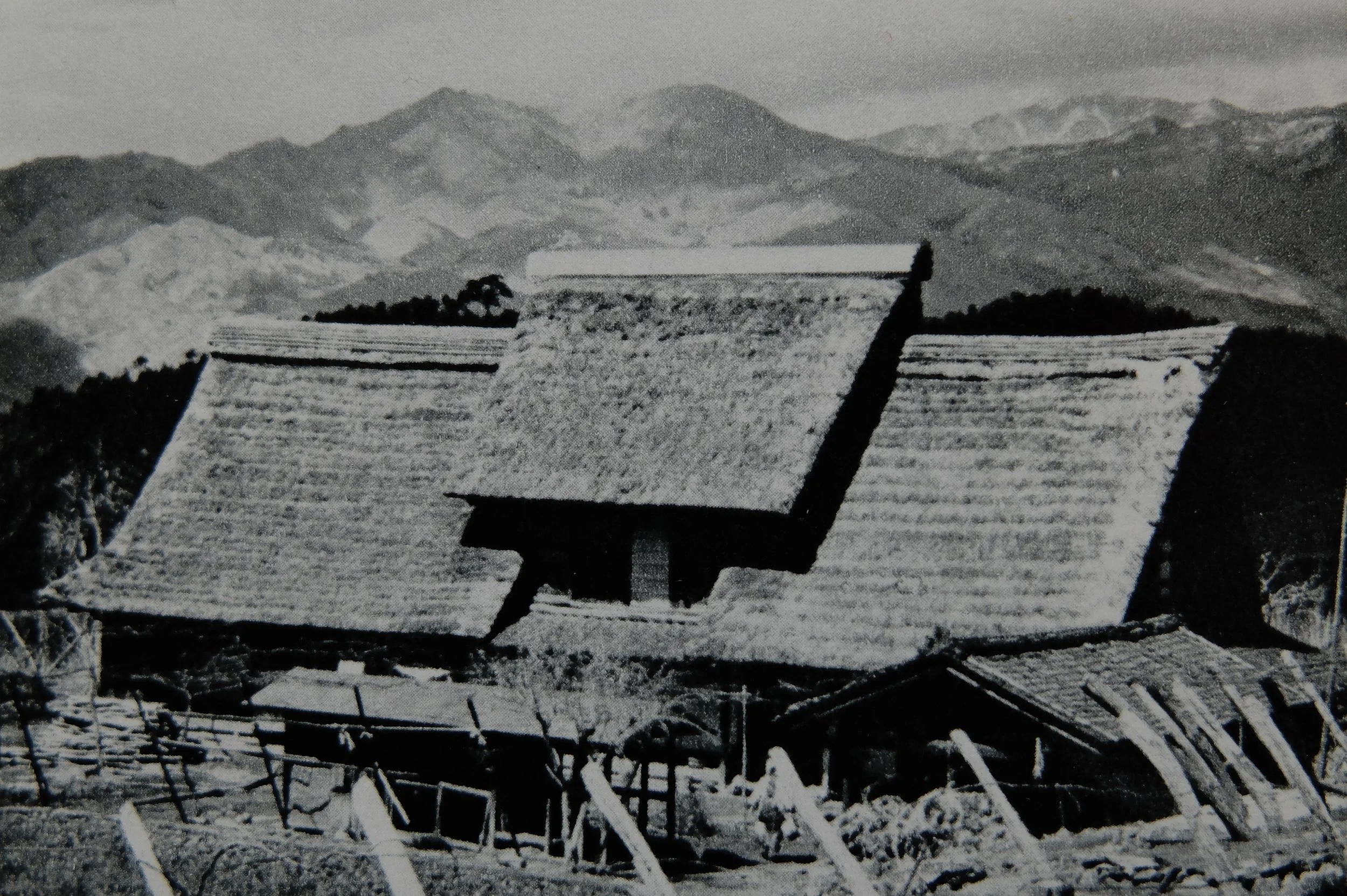
The central part of the ridge of this kiri-hafu tsukuri minka is pushed up to form a lantern that provides light and ventilation to the roof space, used for raising silkworms. This style is called either tsuki-age yane (突上げ屋根, ‘push up roof’) or (yagura-tsukuri 櫓造り, ‘tower style’). Yamagata Prefecture.
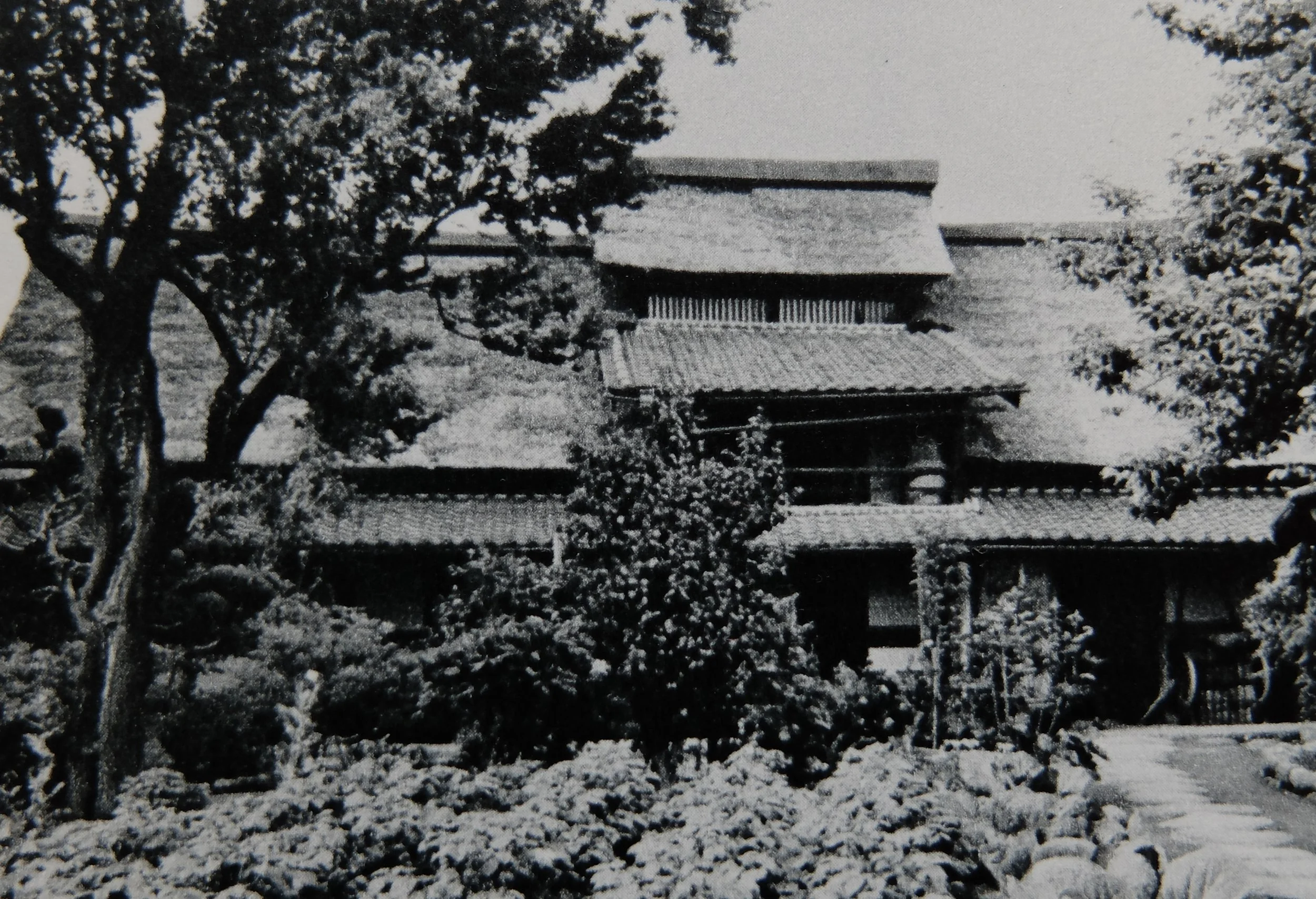
The style of this minka is a hybrid style called the ‘two step chimney style’ (ni-dan kemuri-dashi-tsukuri 二段煙出し造り), combining the tsuki-age mune (突上げ棟 ‘push up ridge’) tower (yagura 櫓) with a tsuki-age yane mado (突上げ屋根窓 ‘push up roof window’), common among the houses of wealthy farmers. The Takano house (Takano-ke 高野家), an Important Cultural Property, is of the same style. Yamagata Prefecture.
The internal layout of kiri-hafu tsukuri minka is generally the hiroma-type three room layout (hiroma-gata san-madori 広間型三間取り), but this too was transformed for the convenience of sericulture, with the ‘living room’ (hiroma 広間), called the idoko (いどこ), being divided into two, transforming the layout into a regular four room layout (seikei yon-madori 整形四間取り).