In addition to the interior stairs covered in the last several posts, minka also feature several interesting types of external stair, which are the subject of this post.
Minka fronting onto canals (hori-wari 掘割) and rivers (tani-gawa 谷川) used these as washing places (arai-ba 洗場), and stone stairs, such as that shown below, can sometimes be found at them. In this example, the treads are anchored into the stone retaining wall of the bank: a cantilevering technique more often associated with modern architecture.
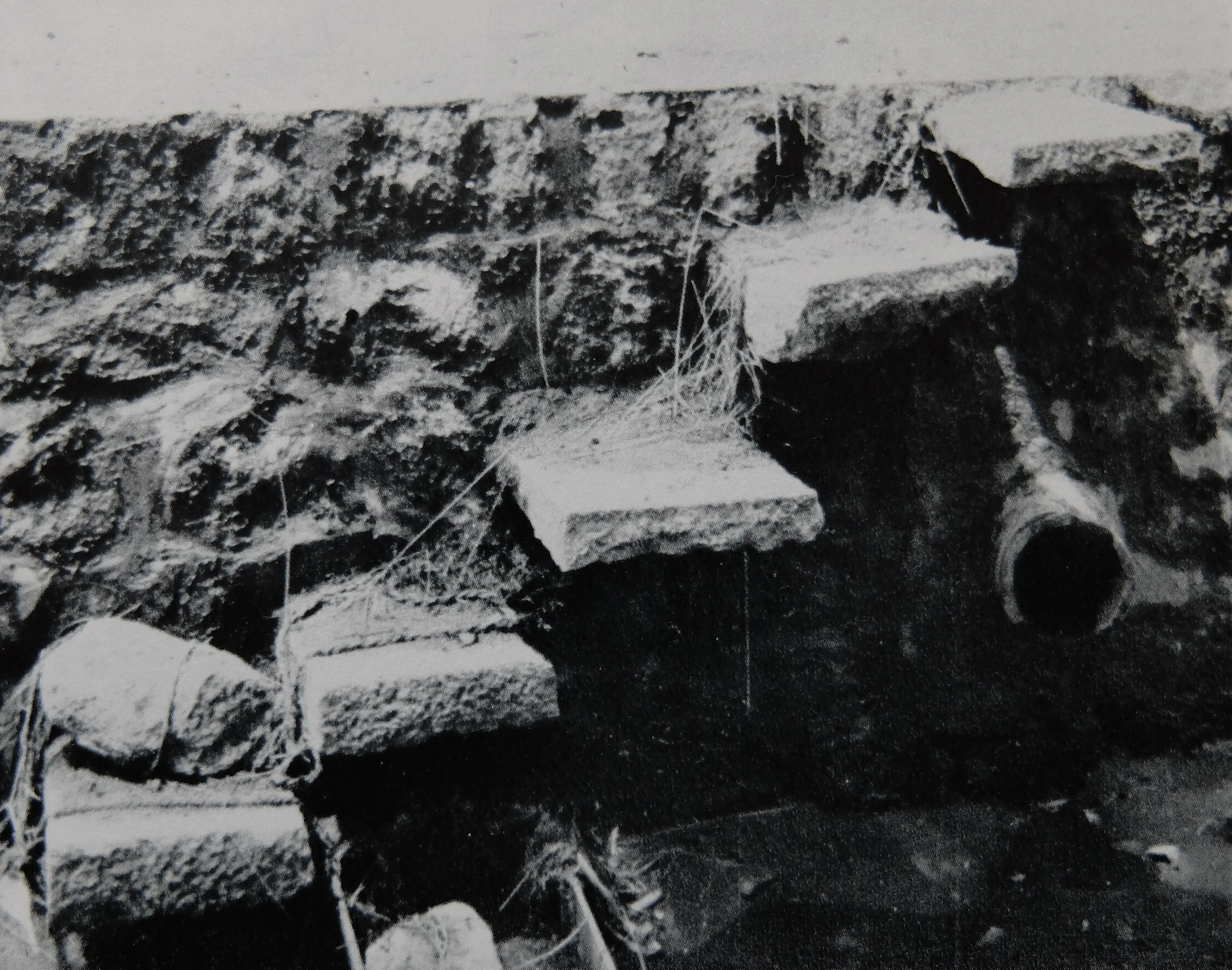
A stone stair (ishi-kaidan 石階段) constructed of cantilevered treads embedded into the stone (retaining) wall (ishi-gaki 石垣) of the bank. Okayama Prefecture.
The image below is from an inn at a hot spring (onsen 温泉) in Shinshū (信州); it is closer to a ramp (sharo 斜路) than a stair, with a gentle gradient achieved by lapping boards together, and is a consideration towards guests who might be undergoing ‘bathing therapy’ (yuji 湯治) for bad legs, or are tired from a long journey.
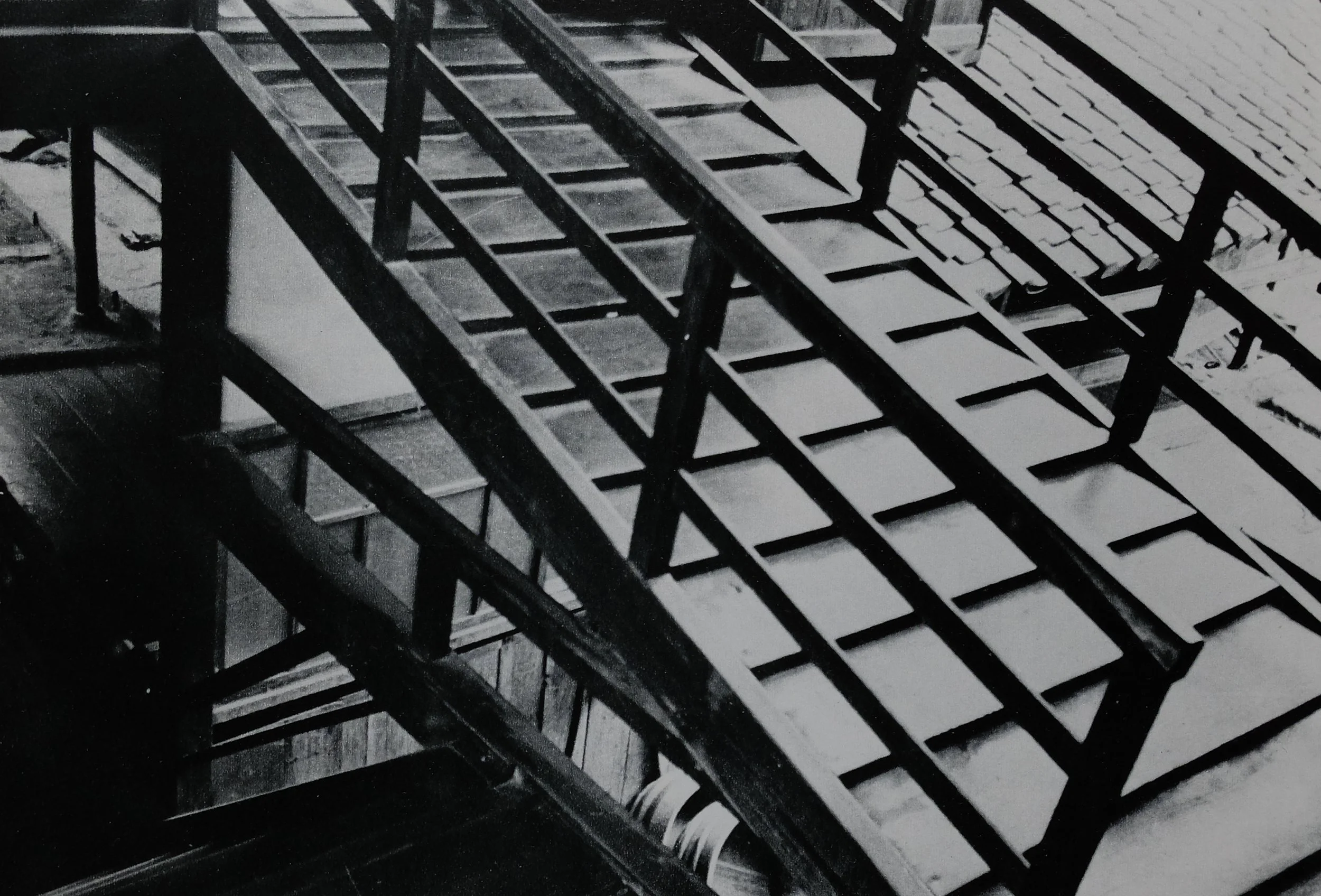
A ramp (keisha-ro 傾斜路 lit. ‘slope road’) stair or keisha-ro kaidan (傾斜路階段) constructed of thick, lapped boards, for hot spring (onsen 温泉) guests in Shinshū (信州), Nagano Prefecture.
The buildings of palaces (kyūden 宮殿) and temples and shrines (shaji 社寺) are generally raised-floor type (taka-yuka-shiki 高床式), and their facades feature stairs called kiza-hashi (階), magnificent structures formed by arraying large, square or rectangular section timbers (kakuzai 角材), which function as both tread (fumi-ita 踏み板) and riser (kekomi-ita 蹴込み板), as seen in the image below. At Ise Grand Shrine (Ise Jingū 伊勢神宮), whose style is thought to have derived from ancient grain storehouses, the present stairs, with features such as railings (kо̄ran 高欄) with ornamental metal ‘caps’ (giboshi 擬宝珠) on the newel posts (oya-bashira 親柱), were added in a later era.
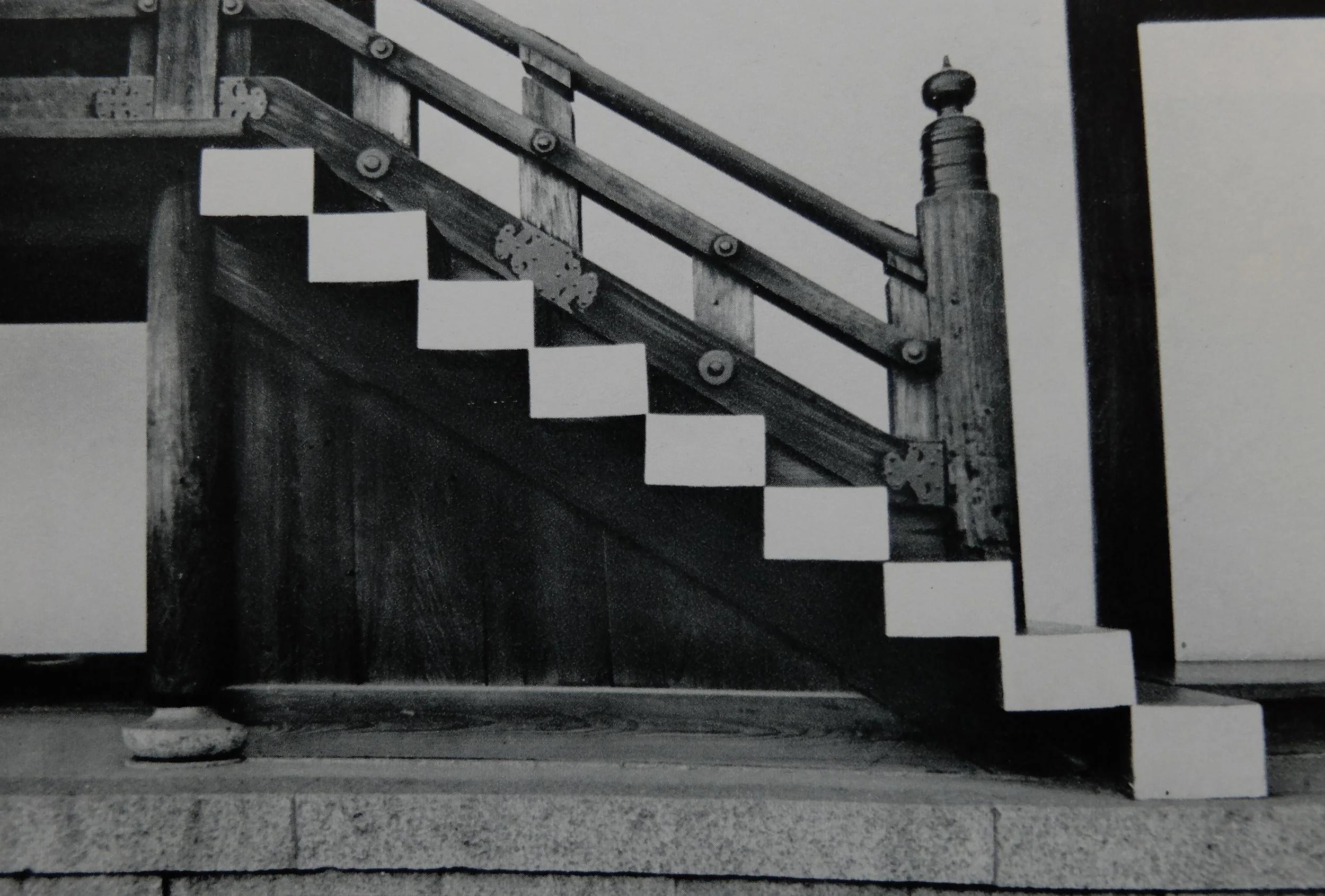
An external stair to a temple or shrine, generally called a kizahashi (階). Kyо̄to City.
In the Suinin-gi (垂仁記), the record of the likely-legendary 11th Emperor Suinin (Suinin-tennо̄ 垂仁天皇), said to have reigned from 29 BC to AD 70, it is recorded that ‘the sacred treasure house also remains with a tree ladder’ or ‘leave the sacred treasure house with a tree ladder’ (hokura mo tate-hashi no mama ni shite 神庫も樹梯のままにして). A hokura (神庫) is a storehouse for sacred treasure (shinpо̄ 神宝); though tate-hashi (樹梯) is written with the characters tree (ki 樹) and ladder/ ‘temporary bridge/walkway’ (hashi/hashigo/kakehashi 梯), tate here likely derives from 立, ‘stand’ or 縦/竪 ‘vertical’. In ancient times such buildings probably had no perimeter ‘verandah’ (en 縁), and a temporary ladder was set up against them when entry was necessary. These buildings are thought to have been similar in form to the Shо̄sо̄-in (正倉院), the surviving Nara period (Nara-jidai 奈良時代 710 - 794) ‘log-wall construction’ (aze-kura zukuri 校倉造) treasure house of Tо̄dai temple (Toudai-ji 東大寺), in Nara Prefecture. The tate-hashi referred to was probably a primitive ‘one pole ladder’ (ippon-bashigo 一本梯子), a simple log or tree trunk into which footholds (ashi-gakari 足掛り) are notched, as in the images below. The word kiza-hashi, too, is thought to derive from kizami hashigo (‘notch ladder’). These ladders have been excavated from Yayoi period (Yayoi-jidai 弥生時代, c. 10th century BC - c. 3rd century AD) archaeological sites (iseki 遺跡) such as Toro (登宮) in Shizuoka Prefecture, where there is a museum. In depictions of ancient raised-floor storehouses (taka-kura 高倉) found on the bell-shaped bronzes (dо̄taku 銅鐸) and earthenware (doki 土器) of the period, we see either ippon-bashigo or ladders, similar in form to modern ladders, constructed of thin timber poles lashed together with wisteria vine (fuji-zura 藤蔓).
Ippon-bashigo were found up until modern times on the island of Amami-О̄shima (奄美大島), where they were used to access taka-kura and constructed with squared timbers (kakuzai 角材) notched out, as seen below. There they are called nobori-hashi (登りはし, ‘climbing ladder’) or simply hashi (はし, ‘ladder’).
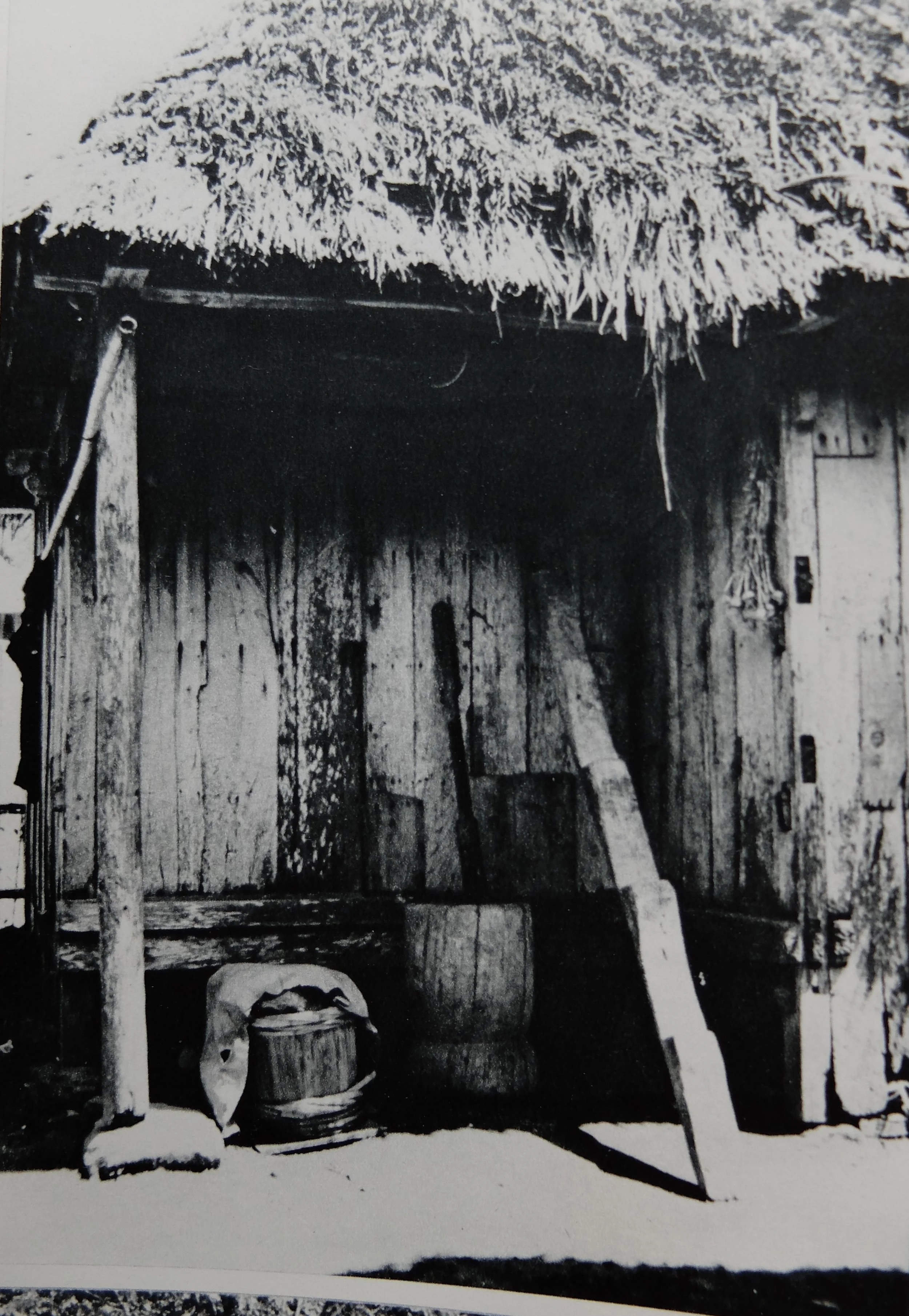
A notched and squared log ‘climbing ladder’ (nobori-hashi のぼりはし) used to access a raised-floor storehouse (taka-kura 高倉). Amami island (Amami-О̄shima 奄美大島), Kagoshima Prefecture.
The Ainu of Hokkaidо̄ also used ippon-bashigo, called nikara (二カラ), to access their raised-floor storehouses, called pū (プー).
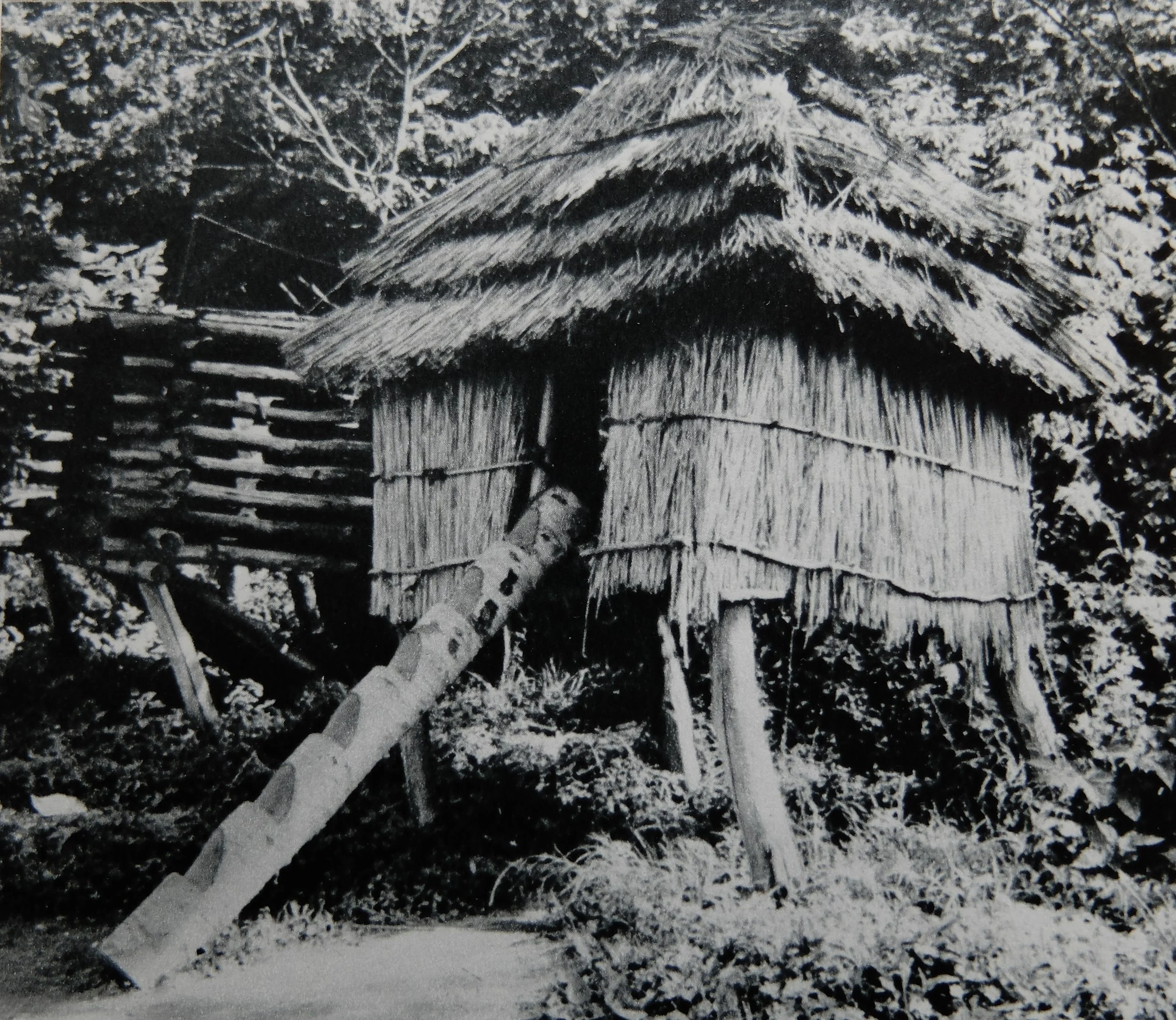
An Ainu notched-log one-pole ladder called a nikara (二カラ), leading up into a raised-floor storehouse (pū プー). Hokkaidо̄ Prefecture.
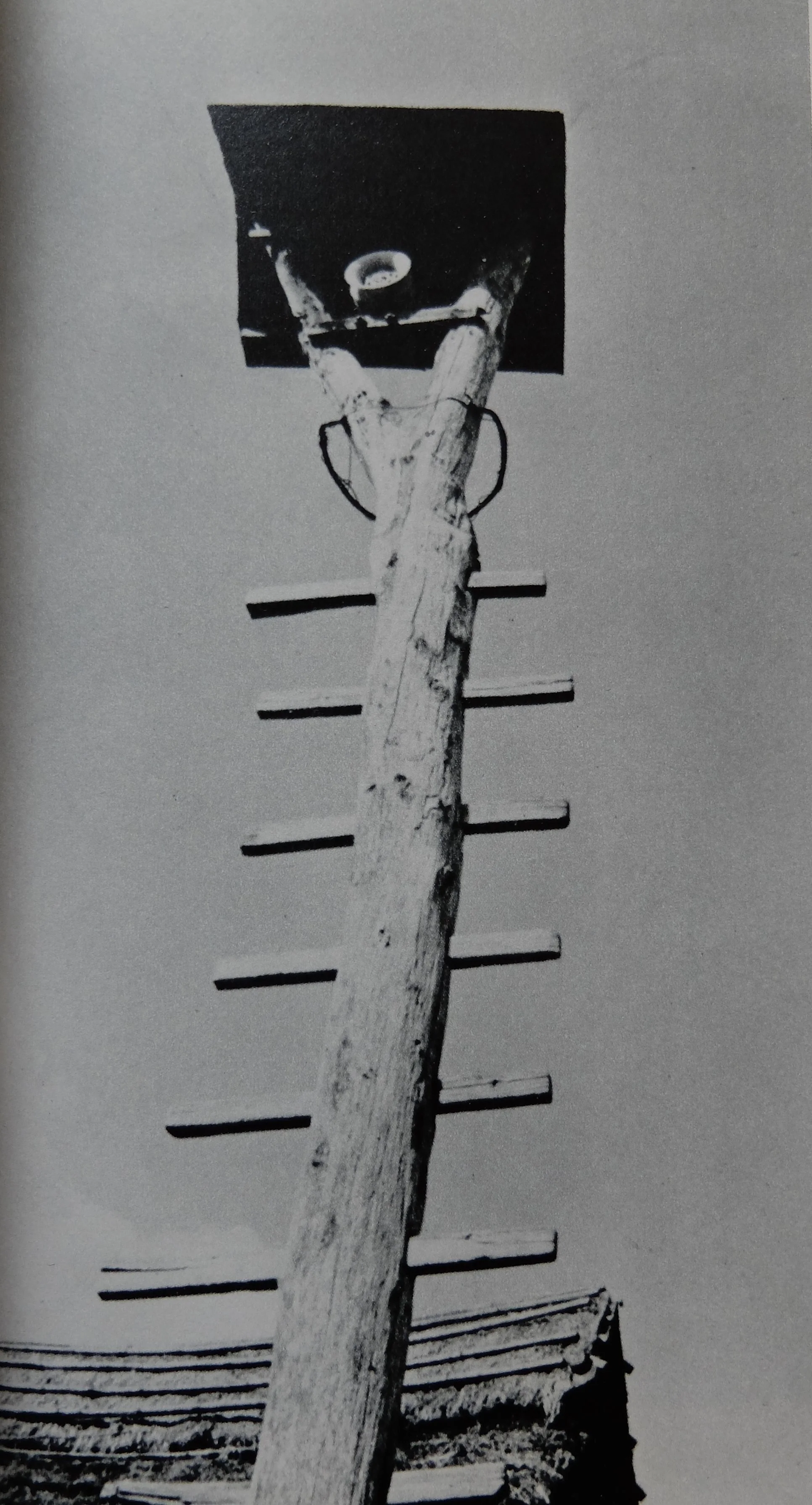
A ‘pole ladder’ (ippon-bashigo 一本梯子) consisting of rungs (san 桟) passed through a forked tree trunk (mata-gi 股木, lit. ‘crotch tree’). Hyо̄go Prefecture.