The shihо̄-buta-zukuri minka of Shikoku (四国) is a style in which the inner space (jо̄ya 上屋) of the main volume (omoya 主屋) of the dwelling has a thatched roof (kusa-yane 草屋根), while the roof over the outer, perimeter space (geya 下屋) is tiled (kawara-buki 瓦葺き) on all four sides. The practice of tiling the roof over the geya appeared from the middle of the Edo period (Edo-jidai 江戸時代, 1603 - 1868), and such roofs can be found all over the country, so are not particularly unusual. The Seto-nai region (Seto-nai chihо̄ 瀬戸内地方), however, is blessed with good quality clay that is ideal for roof tiles, and there are many tile-roofed and few thatched minka; it seems that because of this, the minka of this region in particular have come to be associated with the feature.
The peculiar elements that give these minka their local character are the beautiful convex curves (mukuri 起り) of the roof hips, the large capping tiles (ganburi-gawara 雁振瓦), called here gappuri (がっぷり), that finish the roof ridges, and the barrel tiles (hon-gawara 本瓦), also called maru-buse (まるぶせ), that clad the geya. In the dialect of the region, the geya goes by names like о̄buta (おおぶた, ‘big lid’), obuta (おぶた, ‘honorable lid’), and odare (おだれ, ‘honorable hanging down’); those minka with geya on all four sides are called shihо̄-buta-zukuri (四方蓋造り, lit. ‘four direction lid style’).
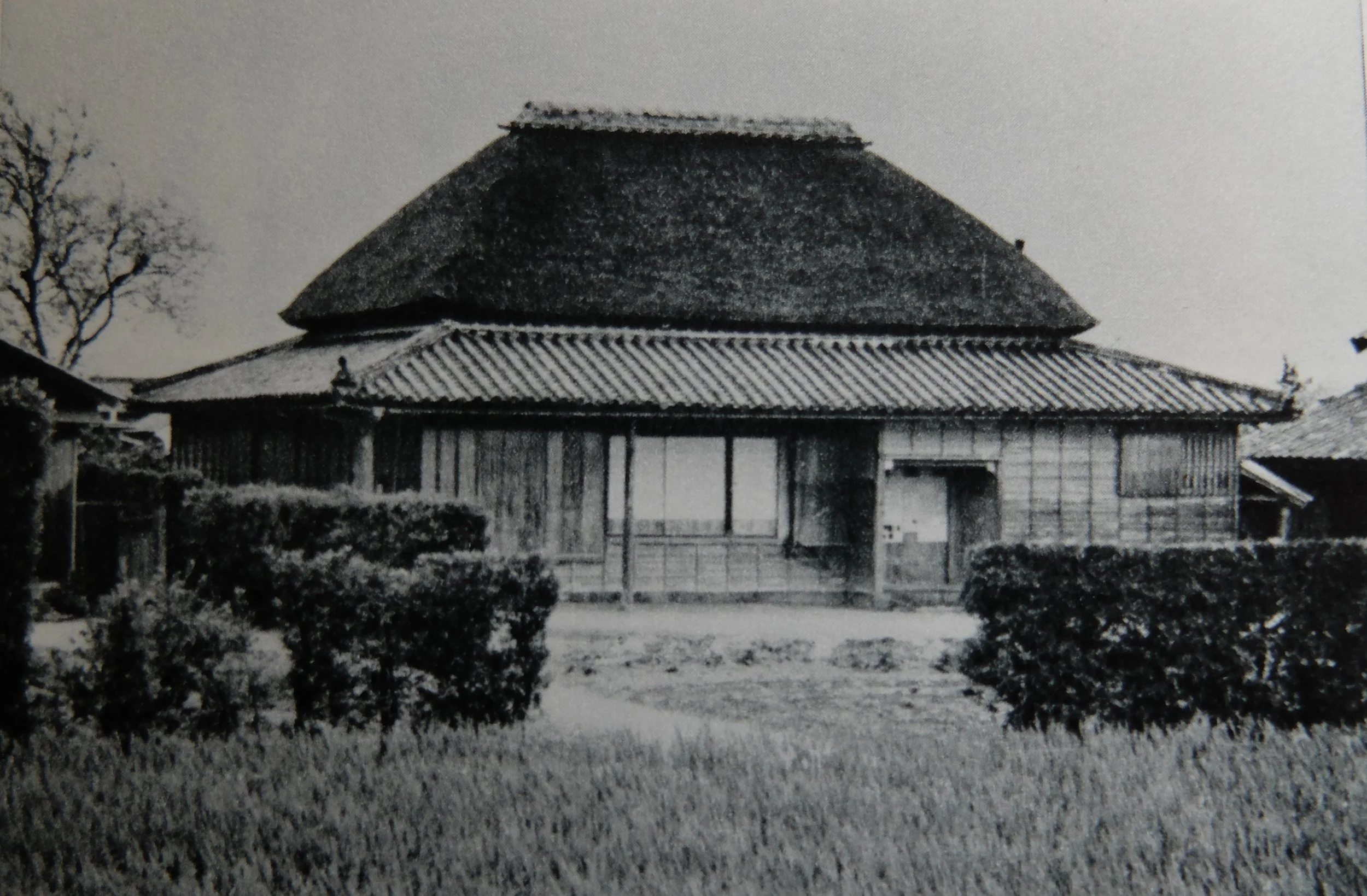
The region of the lower reaches of the Yoshino River (Yoshino-gawa 吉野川) in Shikoku was once a prosperous place where the Asiatic dayflower (ai 藍, Commelina commulis), whose flowers (ai-bana 藍花) are used in ‘deep blue dyeing’ (kon-some 紺染め) to produce the colour indigo (ai-iro 藍色), was cultivated. These ‘indigo dyer style’ (ai-ya no tsukuri 藍屋のつくり) minka are beautiful examples of the shihо̄-buta style. The thatched roofs have tiled ridges and a subtle convex curve (mukuri 起り) to their hips; in contrast, the tiles at the ends of the lower geya roof hips (sori-mune-kudari 隅降棟) project upwards with a convex flare. Tokushima Prefecture.
In contrast, minka without geya, generally called suya-zukuri (素屋造り ‘basic roof style’), the style of roof in which the main thatched roof is continued down and out past the exterior wall to form the eave (hisashi 庇), here are called tsuki-dare yane つきだれ屋根 or simply tsuki-dare (つきだれ), or alternatively tsuku-dare つくだれ or tsuku-dari つくだり. Originally the minka of the general lower classes were restricted to tsuki-dare roofs, and shihо̄-buta were only for village headmen (shо̄ya庄屋) and others of high status, but with the collapse of the class system, shihо̄-buta and so-called ippо̄-buta (一方蓋 ‘one direction lid’), where there is a tiled awning (kawara-bisashi 瓦庇) on the facade side (zenmen 前面), eventually together accounted for the majority of minka, with the tsuki-dare style (つきだれ造り) remaining only in mountainous areas.
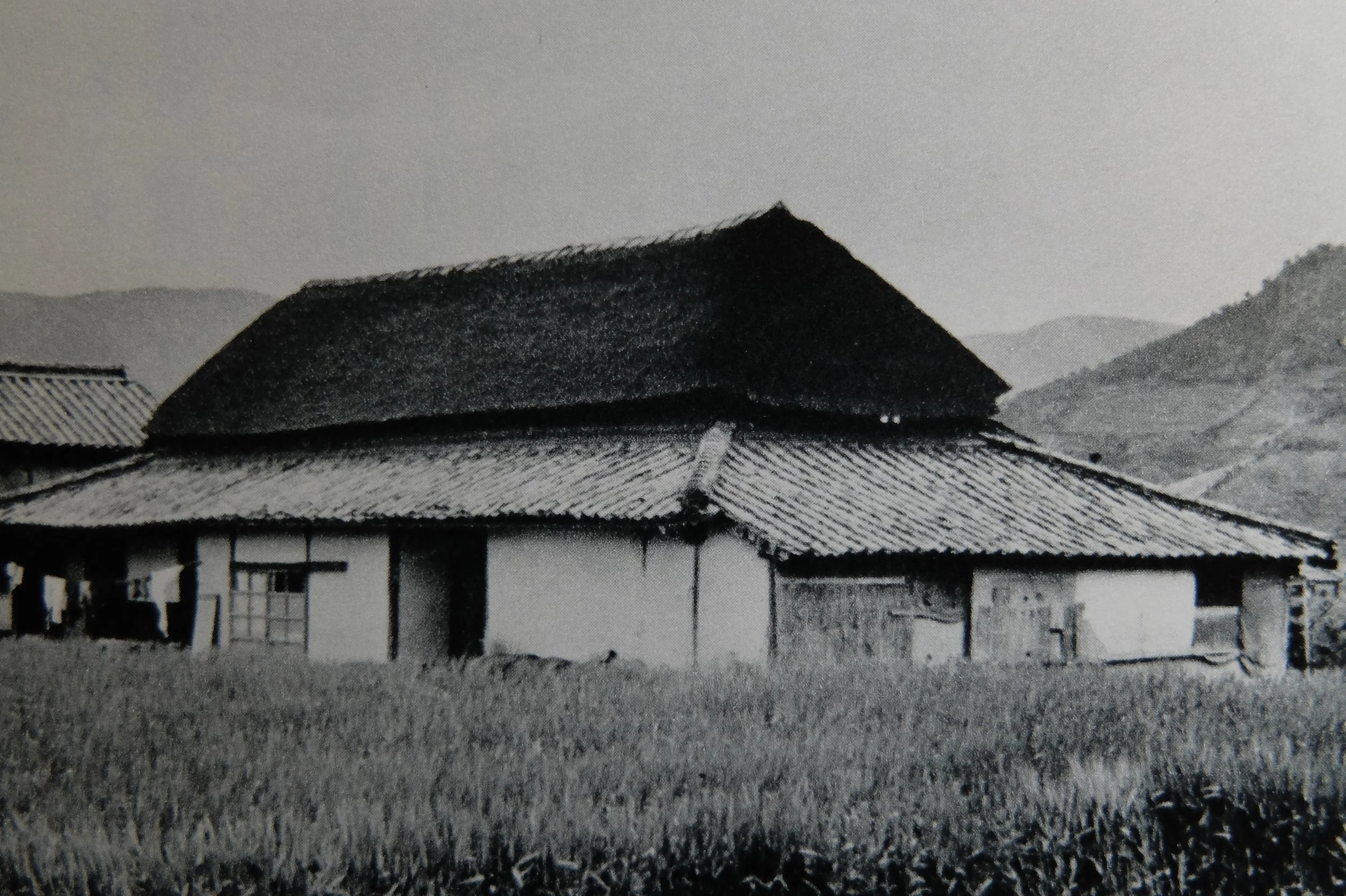
Shihо̄-buta-zukuri minka can also be found on the Sanuki Plain (Sanuki Heiya 讃岐平野). This is a minka on the outskirts of Takamatsu City (Takamatsu-shi 高松市). The ridge is finished with large capping tiles (ganburi-gawara 雁振瓦) called gappuri; the tiled lower roof over the geya is wide. Kagawa Prefecture.
In the past, these minka had a hiroma-type three-room internal layout (hiroma-gata san-madori 広間型三間取り), which later became a regular four-room layout (seikei yon-madori 整形四間取り); many of these structures are compact, with the warm climate being one reason. However, regular six-room layouts (seikei roku-madori 整形六間取り) and even larger can be found among the magnificent edifices of the indigo dyers (ai-ya 藍屋) of Awa (阿波) the major village headmen (dai/о̄-shо̄ya 大庄屋) of Sanuki (讃岐).
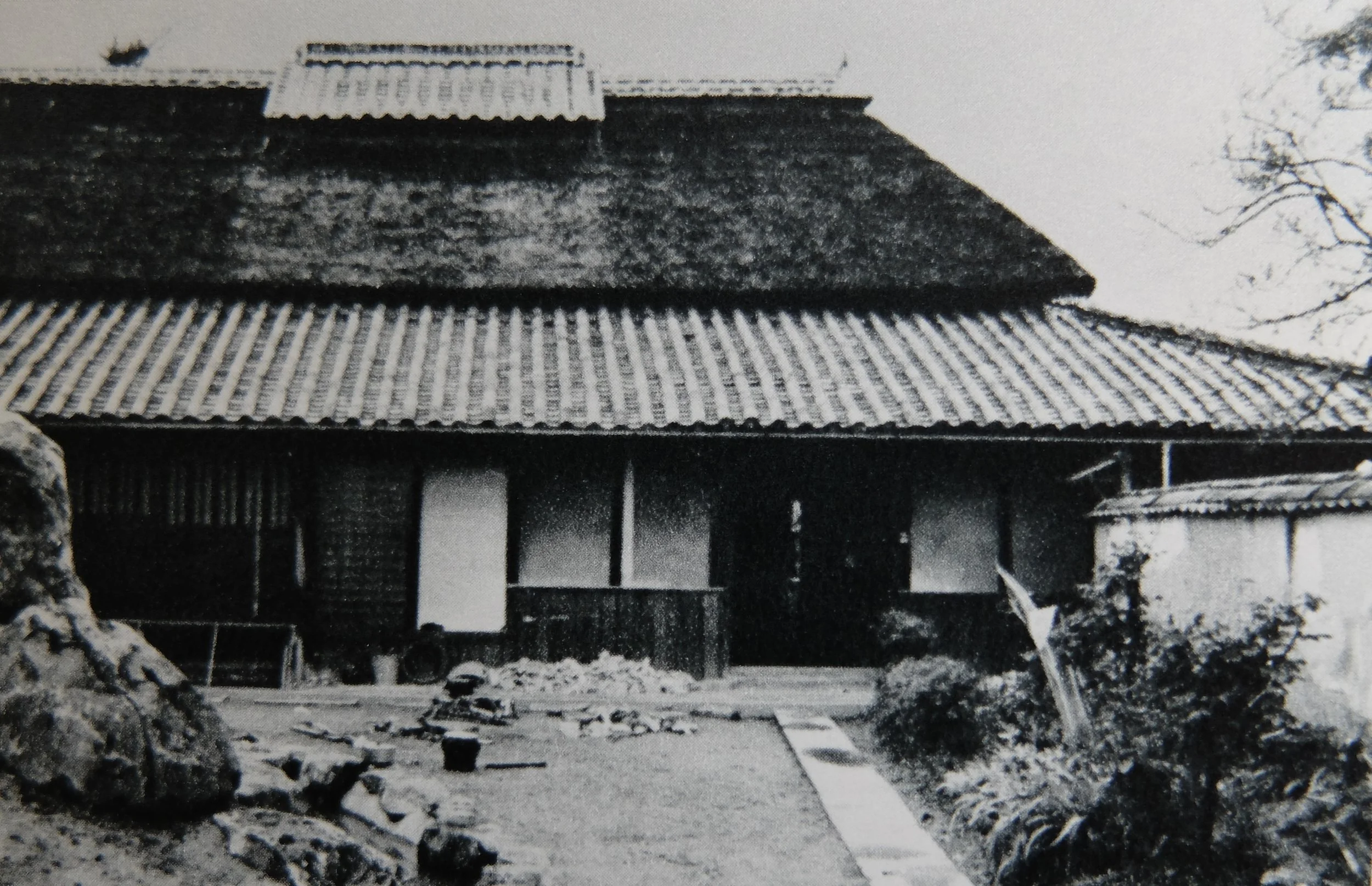
This shihо̄-buta-zukuri minka of a major village headman (dai/о̄-shо̄ya 大庄屋) on the Sanuki Plain (Sanuki Heiya 讃岐平野) is said to have been built in the Keichо̄ era (Keichо̄-nenkan 慶長年間 1596 - 1615), and is designated a Prefectural Cultural Property. Kagawa Prefecture.